
The Complete Florida Vehicle Registration Guide
Everything you need to know about registering your vehicle after moving to Florida.
Step-by-Step Florida Vehicle Registration Process
Registering a vehicle in Florida can seem daunting. But it doesn't have to be.
This guide will walk you through the process step-by-step.
Whether you're a new resident or renewing your registration, we've got you covered.
You'll learn about the necessary documents, fees, and options available.
Let's get started on making your Florida car registration experience smooth and hassle-free.
Who Needs to Register a Vehicle in Florida?
In Florida, vehicle registration is mandatory for all residents with a car. This requirement applies to vehicles purchased, leased, or brought in from another state.
If you're newly moved to Florida, you must register your vehicle within 30 days. Failing to do so can result in fines or penalties.
Here's who needs to register:
New residents with vehicles
Current residents purchasing or leasing new vehicles
Residents bringing vehicles from out of state
Making sure your registration is timely ensures you stay compliant with Florida laws.
Florida Vehicle Registration Requirements
Registering a vehicle in Florida involves meeting specific requirements. Knowing what's needed will simplify the process. The most crucial step is ensuring you have all necessary documents ready.
When registering a vehicle, Florida residents must provide proof of identity and ownership. A valid driver's license is essential. Make sure to gather all documents before heading to the DMV.
Important registration requirements include:
Proof of Florida insurance
Valid Florida driver’s license
Completed vehicle registration application
Proof of vehicle ownership (e.g., title)
Registration fees are based on your vehicle's weight and type. These fees fund state road projects and services. It's crucial to know that these fees are non-refundable once paid.
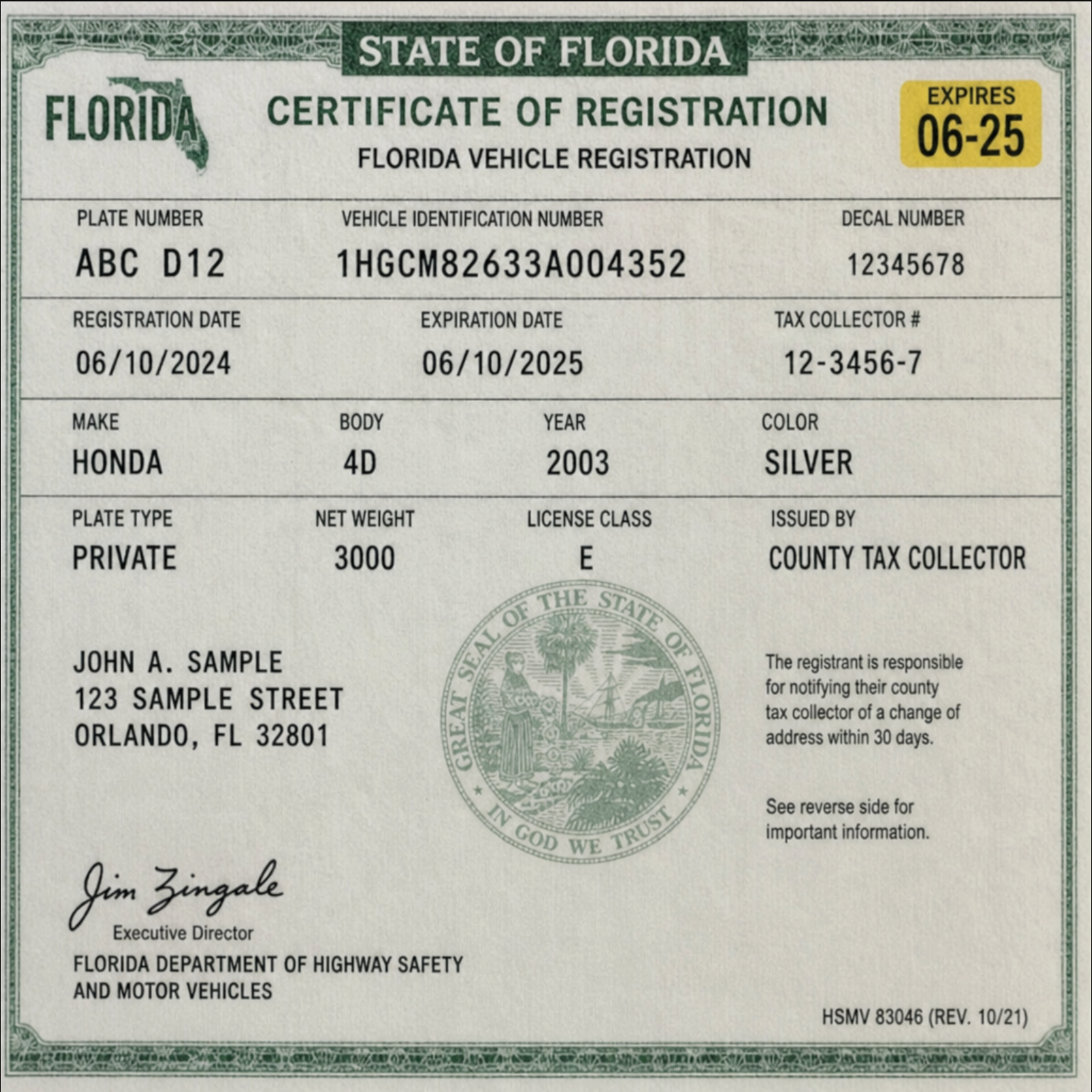
Understanding these requirements will streamline your registration process. Keeping documents organized prevents delays. Preparing thoroughly helps you meet Florida’s vehicle registration standards easily.
Step 2: Obtain Florida Insurance and Driver’s License
Before you can register your vehicle, it's crucial to secure Florida insurance. State law mandates minimum coverage levels for all drivers. Ensure your insurance policy meets these requirements.
Alongside insurance, a Florida driver’s license is a must. If you’re new to the state, transfer your existing license promptly. This step is essential for legal compliance and vehicle registration.
Key items to obtain:
Florida insurance policy
Florida driver’s license or ID card
These documents confirm your ability to legally operate a vehicle in Florida. Starting this process early ensures a smoother registration experience.

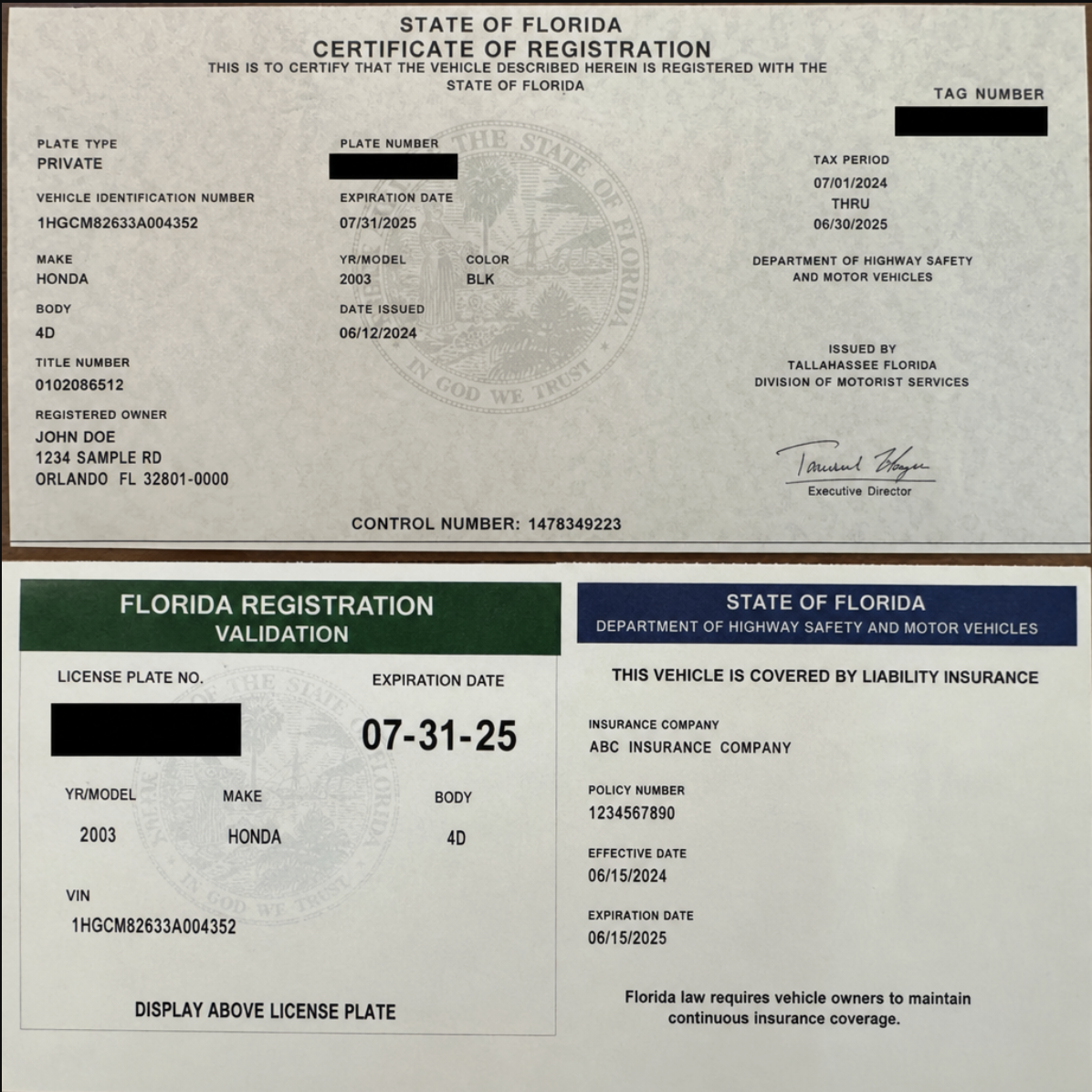
Step 1: Gather Required Documents
The first step in registering your vehicle in Florida is gathering the necessary documents. These documents verify your identity, ownership, and compliance with state laws. Ensuring you have them all will prevent unnecessary trips to the DMV.
Essential documents for registration include proof of identity and ownership. Florida requires specific forms for these verifications. Make sure these documents are current and valid.
Here’s a list of required documents:
Florida driver’s license or ID
Proof of Florida insurance
Vehicle title or bill of sale
Completed application form (HSMV 82040)
Double-check all documents before submission to avoid issues. Missing paperwork could delay your registration. Keeping everything organized simplifies the registration process significantly.
Step 3: Complete the Application for Registration
Filling out the application for vehicle registration is a key step. Obtain the form from the FLHSMV website or local tax office. Double-check all required fields to avoid processing delays.
Ensure you accurately detail your personal information and the vehicle's particulars. Errors in the application can complicate the process.
Important form sections include:
Vehicle make, model, and year
Vehicle Identification Number (VIN)
Owner’s personal details
Completing this form correctly helps expedite your registration. Take your time and review each section thoroughly.
Step 4: Pay Registration Fees and Taxes
Understanding the cost structure is essential for a smooth registration. Fees are based on vehicle type, weight, and desired registration term. Florida offers one-year and two-year registration options.
Prepare for additional charges, including county fees and potential sales tax. These expenses are outlined on the FLHSMV fee calculator. It’s a handy tool to estimate total costs before visiting the office.
Make the payment through acceptable methods, which may include:
Cash
Credit or debit card
Money order or check
Providing the correct payment ensures timely processing. Double-check the amount owed and keep your receipt for future reference. This step finalizes your financial commitment to the registration process.
Step 5: Submit Your Application (In Person, Online, or By Mail)
Submitting your vehicle registration application can be done in various ways in Florida. Choose the method that best suits your convenience and needs. The flexibility accommodates busy schedules and varying preferences.
Here are the submission options:
In Person: Visit your local tax collector’s office for face-to-face assistance.
Online: Use the MyDMV portal for a straightforward online process.
By Mail: Send your documents to the specified FLHSMV address.
Each method has its benefits, so consider factors like speed, personal interaction, and accessibility. Ensure all forms are complete and accurate to avoid delays. Once submitted, wait for confirmation of your successful registration.
Special Situations: Out-of-State, Leased, and Military Vehicles
Certain vehicle owners in Florida face unique registration circumstances. Understanding these special situations ensures compliance with state regulations. Tailor your approach based on your specific scenario.
Out-of-state vehicles require additional steps. A VIN inspection might be necessary to validate your vehicle's details. This inspection assures compliance with Florida standards.
For leased vehicles, confirm if your leasing company provides necessary documents. Typically, you'll need a lease agreement or power of attorney form. These documents verify your authorization to register the vehicle in Florida.
Military personnel have different rules. Active-duty members may register their vehicles without acquiring Florida insurance. However, proof of out-of-state insurance is essential.
Key Points for Special Situations:
Out-of-State Vehicles: May need VIN inspection.
Leased Vehicles: Require lease documents for proof.
Military Vehicles: Must show out-of-state insurance.
Florida Vehicle Registration Renewal Process
Renewing your vehicle registration in Florida is straightforward. The state provides multiple ways to complete this process. Timely renewal helps avoid penalties and ensures your vehicle remains legal.
Renewal notices are typically sent out a month before expiration. Check your notice for specific renewal options. Each notice includes details needed for a smooth renewal process.
You have three primary options for renewal: online, by mail, or in person. Online renewals are the most convenient. Simply visit Florida's MyDMV Portal to get started.
Choosing the right method depends on your circumstances. Ensure you have current insurance and emissions compliance. Remember, late renewal can lead to extra fees.
Key Renewal Options:
Online: Via MyDMV Portal.
Mail: Follow instructions on your renewal notice.
In Person: Visit a local tax collector's office.
Online Registration and Renewal Options
Florida offers a convenient online system for vehicle registration and renewal. This method saves time and minimizes in-person visits. Access is available through the state's MyDMV Portal.
To use the online service, ensure you have an internet connection and necessary documents. This includes insurance proof and a valid driver's license. Online transactions are typically fast and secure.
The MyDMV Portal provides several services. Easily manage your vehicle registration with just a few clicks. This platform is designed for user-friendliness and efficiency.
Online Services Available:
Initial registration
Renewal of registration
Payment of fees and taxes
Fees, Penalties, and Additional Costs
Understanding fees is crucial when registering your vehicle in Florida. These costs can vary based on the vehicle's specifications. Weight, type, and registration period all influence the amount.
Be aware of potential penalties for late renewals. Delays can incur extra fees beyond standard costs. Plan to renew on time to avoid these charges.
Common Costs to Consider:
Standard registration fees
Penalties for late registration
Additional charges for specialty plates
Tips for a Smooth Registration Experience
Streamline your Florida vehicle registration with a few practical tips. Preparing early and following clear steps can ease the process.
Helpful Tips
Gather documents beforehand to avoid delays.
Check your registration status to stay compliant.
Plan for any additional fees to prevent surprises.
By staying organized and informed, registering your vehicle can be hassle-free. These steps help keep you legal and on the road in Florida.
Conclusion: Stay Compliant and Drive Legally in Florida
Ensuring your vehicle registration is up-to-date keeps you on the right side of the law. It's a vital aspect of vehicle ownership in Florida. Regular renewals and checks keep your registration active and your driving record clean.
By understanding and following the registration process, you contribute to safe and organized roadways. Stay informed to maintain your compliance and peace of mind on Florida roads.

It’s Time to Update Your Auto Insurance.
Moving to Florida is the perfect time to review your auto insurance coverage. Whether you're transferring an existing policy or shopping for new coverage,
Ted Todd Insurance helps you understand Florida’s insurance rules.
It lets you compare coverage options.
It helps you stay protected before you register your vehicle.
Your Questions, Answered
-
Most new residents are required to title and register their vehicle within 10 days of establishing Florida residency.
-
No. Once your vehicle is registered in Florida, you'll receive Florida registration and license plates.
-
Yes. You'll generally need a Florida auto insurance policy before registering your vehicle.
-
Many vehicles being titled from another state require a VIN verification before a Florida title can be issued.
-
Certain transactions may be completed by an authorized representative if the required documentation is provided. Check with your local tax collector for specific requirements.
-
Your lender may need to transfer your title to Florida before the registration process can be completed. Florida has procedures for handling out-of-state lienholders.
-
Yes. Each vehicle operated on Florida roads must generally be titled and registered according to Florida law.
-
No, emissions testing is not a requirement here.
-
Yes, online registration options are available.
Understanding these key details helps ensure a smooth registration experience. Access additional resources on the FLHSMV website for more information.